
Retainers hold your teeth in their new position after braces or Invisalign. Orthodontic specialist Dr. Adrianna Oseguera explains the types, how long to wear them, and what to do if one is lost or broken.
A retainer is a custom-made appliance that holds your teeth in their new position after braces or clear aligners. Teeth naturally tend to drift back toward their old positions, so retention is part of your orthodontic treatment, not an optional extra. Your orthodontist will recommend the type and the wear schedule that fit your case.
When braces or aligners finish moving your teeth, the bone and gum fibers around them are still adjusting. Without support, teeth can gradually shift back, a change orthodontists call relapse. Everyday habits, natural growth and aging can also move teeth slowly over the years.
A retainer protects the result you worked for, whether you were treated with braces or Invisalign clear aligners. Skipping it is a common reason a straight smile changes after treatment.
There are three common options. Each has trade-offs, and some patients use a combination.
| Type | What it is | Pros | Cons | Often suited for |
|---|---|---|---|---|
| Fixed (bonded) | A thin wire bonded behind the front teeth | Works around the clock; nothing to remember; not visible from the front | Harder to clean around; can come loose; needs regular checks | Lower front teeth and cases with a higher risk of shifting |
| Hawley (removable) | Acrylic plate with a metal wire across the front teeth | Durable and adjustable; easy to remove for cleaning | More noticeable; can feel bulky at first and may affect speech briefly | Teens and adults who want a long-lasting removable option |
| Clear (vacuum-formed, “Essix”) | Transparent plastic tray that covers the teeth | Nearly invisible; familiar to Invisalign patients | Can wear down, stain or crack over time; must not be exposed to heat | Patients who finished with aligners or who prefer discretion |
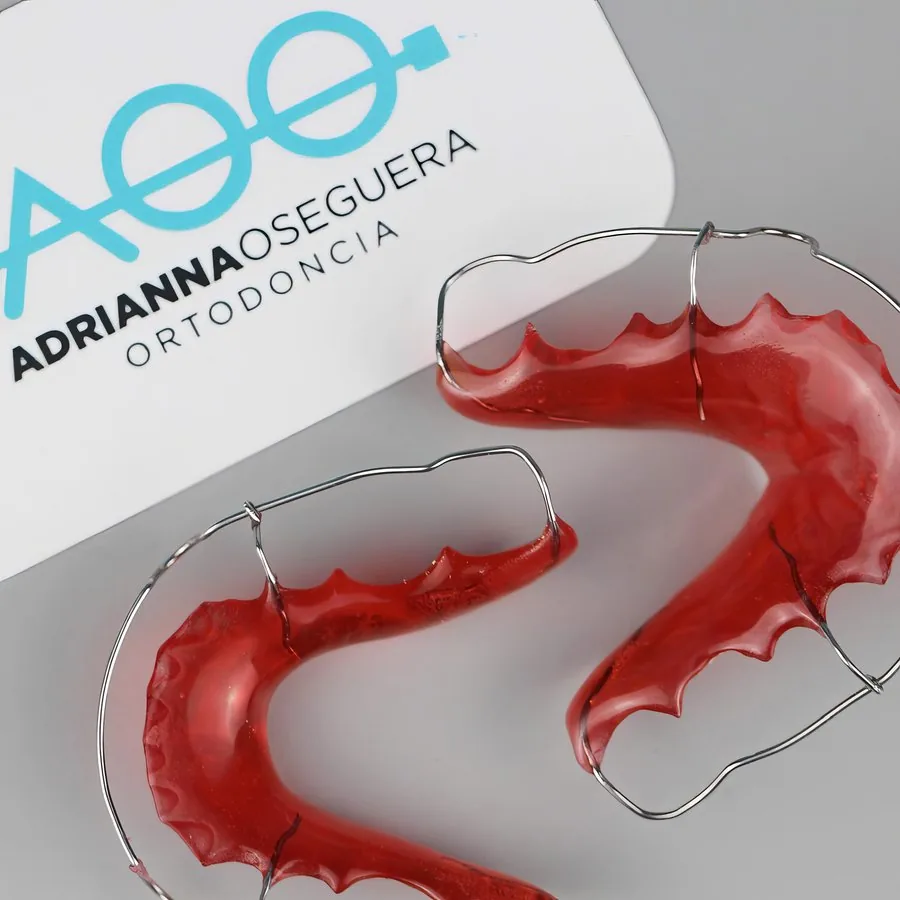
Two removable Hawley-style retainers. Your orthodontist chooses the design based on your bite, your treatment and your habits, so avoid assuming that what worked for a friend will work for you.
Schedules vary from patient to patient, so follow the instructions you were given. As a general pattern, many orthodontists ask for full-time wear (except when eating and brushing) at the start, then reduce to nights only. For many patients, long-term nighttime wear is recommended to keep teeth stable, and a fixed retainer stays in place continuously.
Do not stop on your own because your teeth “feel settled.” Teeth can move slowly without any pain, and the change is often noticed only when the retainer no longer fits.
More daily-care advice is in our care and emergencies guide.
Do not wait. Teeth can start moving within days to weeks without a retainer, and the longer you wait, the less likely an old retainer is to fit.
Avoid biting hard foods and call us promptly. A loose wire can irritate your tongue or cheek, and teeth can shift if one end detaches.
A 3D intraoral scan, like the iTero scan used in our clinic, helps us see how much your teeth have moved. Whether a new retainer is enough depends on that evaluation.
Our clinic is about 8 minutes from the Calexico West Port of Entry, so a check-up or replacement visit fits easily into a day trip. Patients in Phoenix, Las Vegas and other cities can read about our remote monitoring options, and our guide for Calexico and Imperial Valley patients explains the crossing.
If something goes wrong with your retainer, message us on WhatsApp with a photo and we will tell you the next step.
Children who had a palatal expander or other maxillofacial orthopedic treatment often need a stabilization period afterward, because growth continues. The orthodontist decides whether a retainer, further treatment or simple monitoring is the next step, and when to start.
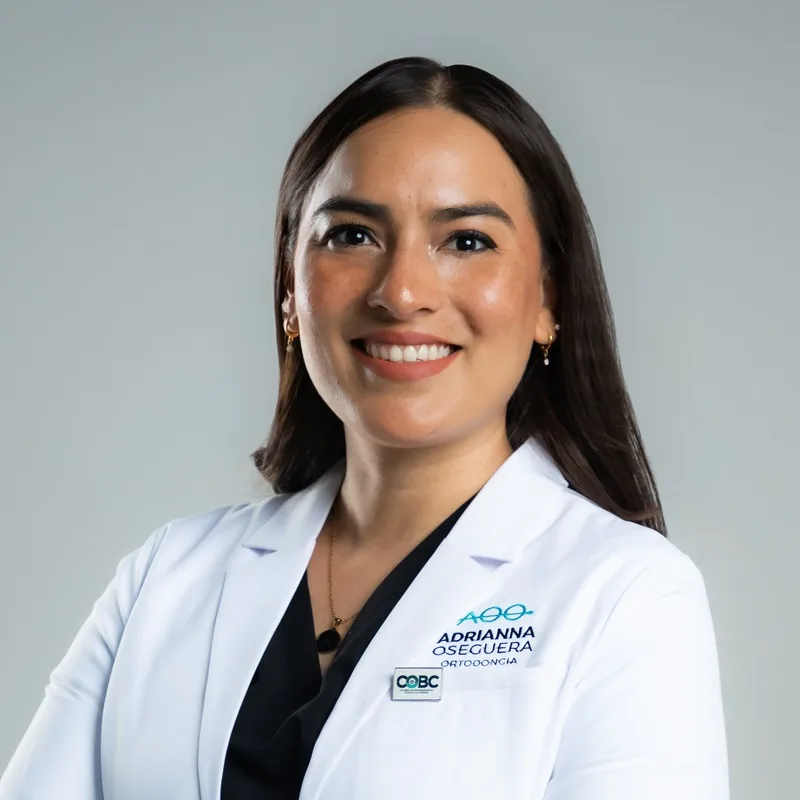
Dr. Adrianna Oseguera is an orthodontic specialist in Mexicali. She holds a dental surgery degree from UABC (License 8556217) and a Master's and specialty in Orthodontics and Dentofacial Orthopedics from Universidad De La Salle Bajío (License 11410417), and she is a certified Invisalign Doctor.
The clinic is at Av. República de Brasil 499-3, Cuauhtémoc Norte, Mexicali, and the team attends patients in English and Spanish.
It depends on your case, so follow your orthodontist's schedule. Many patients wear it full time at first and then at night, and long-term nighttime wear is commonly recommended to keep teeth stable.
Not without asking your orthodontist. Teeth can keep shifting slowly throughout life, so many specialists recommend continuing some form of retention. Your orthodontist can tell you if and when you can reduce wear.
Mild tightness after missing a few nights can mean your teeth have started to move. Do not force the retainer into place. If it feels tight or does not seat fully, contact the clinic for an evaluation.
Neither is better for everyone. Fixed retainers work around the clock but need careful cleaning, while removable ones are easier to clean but depend on you wearing them. Your orthodontist may recommend one or a combination.
Retainers are designed to hold teeth in place, not to move them significantly. If your teeth have shifted noticeably, you need an evaluation, because you may need a new retainer or additional treatment. Forcing an old retainer on can be uncomfortable.
Schedule an evaluation first. We will check how your teeth have moved to determine whether a new retainer is enough or whether other treatment is needed. Message us on WhatsApp to get started.
Message us on WhatsApp or book an appointment online. Our bilingual team will guide you.
Message via WhatsApp: +52 (686) 140-9235Specialist orthodontic care with Dr. Adrianna Oseguera in Mexicali, B.C.
Fill out this quick form and we will confirm availability in minutes.
Convenient access in Col. Cuauhtemoc Norte, Mexicali.